
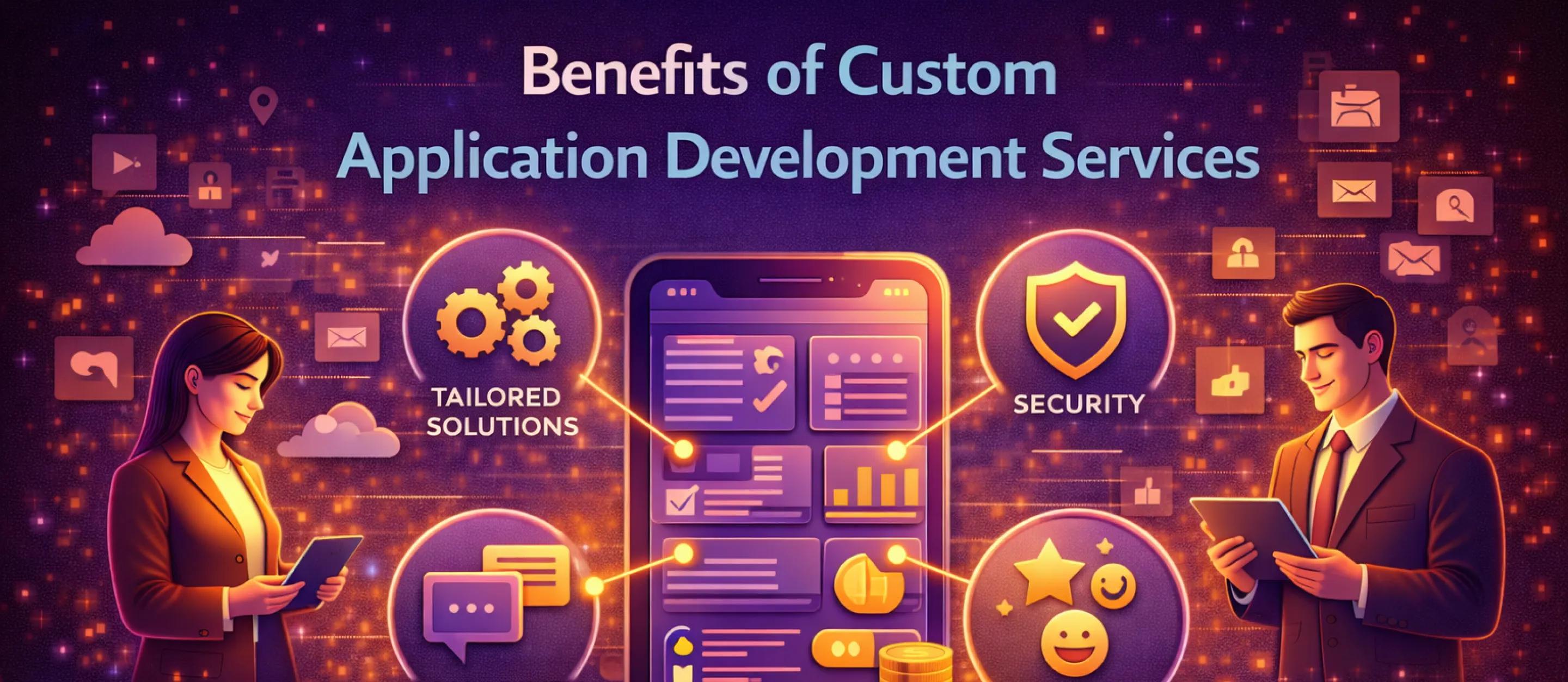
Is your team drowning in a sea of spreadsheets? If your daily workflow feels held together by digital duct tape and manual data entry, you are not alone. Many organizations eventually hit the limits of off-the-shelf software, especially when teams grow, services diversify, and stakeholders demand faster turnaround.
This forces a practical question: do your tools support your process, or are you constantly bending your process to fit the tool? You can usually spot the problem when teams rely on fragile workarounds just to complete routine tasks: exporting data for a custom report, copying and pasting between systems to invoice a customer, or maintaining parallel “shadow trackers” because the primary system cannot capture a key business rule.
The solution is rarely “a better spreadsheet.” It is usually a better way of working. That is the core promise of custom application development services: building software that fits how your organization should operate, not how a generic template assumes you operate. In practice, that can include custom web application development services for internal portals and dashboards, custom mobile application development services for field teams and customers, and broader software development services that unify data, automate workflows, and reduce operational friction.
The Off-the-Rack Problem: Hidden Costs of Generic Software
Off-the-shelf products are built to serve broad markets, which means they necessarily simplify real-world variation. The gap between “how the software wants you to work” and “how your business actually works” shows up as extra clicks, duplicate data entry, and manual handoffs. The cost is not just time; it is also inconsistency. Two people may interpret the workaround differently, and the process becomes difficult to audit.
2) Data Fragmentation and Reduced Trust
When a tool cannot produce the views a team needs, people create their own source of truth in spreadsheets, email threads, or ad hoc notes. The organization slowly accumulates multiple versions of reality. This affects forecasting, compliance reporting, and customer communication because the team is no longer confident that the numbers match. The longer the fragmentation continues, the harder it becomes to consolidate.
3) Scaling Limits and Strategic Constraints
Generic systems often handle a “standard” version of a workflow but struggle with unique service lines, specialized approvals, or multi-tenant scenarios. This becomes a strategic problem: the software starts to dictate what your organization is able to offer. When a tool becomes a constraint, growth requires either expensive add-ons, brittle integrations, or a costly migration.
4) Vendor Lock-In and Unpredictable Long-Term Cost
Packaged software may appear affordable initially, but costs can escalate through per-seat licensing, usage-based pricing, premium modules, and mandatory upgrades. If critical workflows depend on a single vendor, switching costs rise quickly. Even when you keep the tool, you may pay for features you do not use while still lacking the features you need.
What “Custom Application Development” Actually Means
Custom does not mean “reinvent everything.” It means intentionally building only what should be unique to your organization, while leveraging proven components for the rest.
A typical custom system includes:
- A workflow layer that models your actual business rules (approvals, exceptions, permissions, and status changes).
- A data layer that stores and governs the information your organization depends on.
- A user experience layer designed for your users, whether they are internal staff, partners, or customers.
- Integration points that connect to existing systems (payments, accounting, CRM, GIS, document management, email/SMS, identity providers).
This is where different categories of app development services fit:
- Custom web application development services focus on portals, dashboards, internal tools, reporting interfaces, and customer-facing web apps.
- Custom mobile application development services focus on iOS and Android experiences for field work, notifications, offline workflows, scanning, photo capture, and on-the-go approvals.
- Software development services can include back-end systems, APIs, data pipelines, security hardening, DevOps automation, and ongoing application support.
When designed well, these elements form a single product ecosystem rather than a collection of disconnected tools.
Core Benefits of Custom Application Development Services
Custom development is often justified as “efficiency,” but its benefits are broader and more durable. The following advantages are the ones organizations most consistently realize when the project is scoped correctly.
Operational Efficiency That Matches Your Workflow
Custom software can remove entire categories of manual work by embedding your rules directly into the system. Instead of relying on employee memory and informal training, the software guides users through the correct steps, validates inputs, and automates handoffs.
Examples include:
- Converting multi-step spreadsheet approvals into a single tracked workflow with timestamps and role-based access.
- Generating documents, invoices, or status notifications automatically based on state changes.
- Standardizing intake forms so the organization captures consistent, complete data.
The practical outcome is fewer errors, faster cycle times, and reduced rework.
A Single Source of Truth
Custom applications are often designed around a clear data model: what entities exist, who owns them, and how they change over time. This creates a more reliable operational picture, which improves management decisions and customer communication. A unified system also makes analytics more meaningful. When each department is not operating from separate spreadsheets, metrics can be trusted. Reporting shifts from “reconciliation” to “insight.”
Better User Experience for the People Who Actually Use the Tool
Many packaged tools optimize for breadth, not usability for a particular team. Custom interfaces can be tailored to the user’s role, context, and frequency of use.
- A customer sees a simple status view and clear next steps.
- A coordinator sees exceptions, backlogs, and priority flags.
- An administrator sees configuration controls, audit logs, and export tools.
This reduces training overhead and improves adoption because the system aligns with how people work.
Competitive Differentiation Through Capabilities, Not Marketing
A well-designed application can become a business asset that competitors cannot easily replicate. Differentiation often comes from operational capabilities that create a better customer experience: faster turnaround, more transparency, fewer errors, and more consistent service.
Custom mobile application development services are especially powerful here because mobile workflows can improve responsiveness. For example, field teams can capture structured data, photos, signatures, or GPS context on site, reducing delays and improving quality.
A Foundation That Can Evolve
Growth tends to create new requirements: new customer types, new locations, new reporting standards, and new integrations. A custom platform can be built to support change through modular architecture and clear interfaces. Rather than replacing tools every few years, organizations can extend the system intentionally. That reduces long-term disruption and keeps institutional knowledge inside the platform.
Why Custom Web and Custom Mobile Often Belong Together
Many organizations initially treat web and mobile as separate products, but they often represent two interfaces into the same system.
- Web applications are typically best for information-dense work: administration, reporting, bulk edits, configuration, and documentation.
- Mobile applications are typically best for time-sensitive or context-rich work: field operations, notifications, approvals, scanning, and offline capture.
By designing one shared back end with two tailored interfaces, custom web application development services and custom mobile application development services can reinforce each other. The same workflow and data model supports both experiences, which reduces duplication and increases consistency.
Risk, Security, and Governance as First-Class Benefits
Custom applications are sometimes mistakenly viewed as riskier than packaged tools. In practice, risk depends on engineering discipline and governance.
A custom system can improve security and governance when it:
- Implements role-based authorization aligned with your organizational structure.
- Maintains audit trails for sensitive actions and approvals.
- Applies encryption standards for data at rest and in transit.
- Enforces retention and deletion rules to support privacy expectations.
- Provides clear separation between environments (development, staging, production).
For regulated or public-facing environments, accessibility and compliance can also be designed into the product from the beginning rather than treated as an afterthought.
A Practical Blueprint: How Professional Teams Build Custom Applications
Quality app development services follow a structured process that makes cost, timeline, and trade-offs explicit.
Phase 1: Discovery and Solution Design
This phase aligns stakeholders, defines workflows, and converts vague goals into requirements that can be built and tested. It typically includes user journeys, process mapping, data modeling, and success metrics.
Phase 2: UX/UI and Technical Architecture
Designers prototype the user experience, while engineers define architecture: data storage, API strategy, security model, and deployment approach. At this stage, the team should identify key risks (integrations, performance constraints, compliance needs) and address them before implementation.
Phase 3: Development and Quality Assurance
Development is not only writing features; it is building them in a way that can be maintained. Automated tests, code reviews, and staged environments reduce defects and protect future velocity. Quality assurance validates workflows on realistic data and devices.
Phase 4: Launch, Training, and Ongoing Support
Launch includes deployment, monitoring, and operational readiness. Training and documentation improve adoption. After launch, software development services often shift to support, enhancements, security patching, and performance tuning.
Conclusion: From Duct Tape to Durable Systems
A workflow held together by spreadsheets and manual handoffs is not a permanent condition. It is often a sign that your organization has outgrown off-the-shelf tools and needs a platform that matches its real operating model.
The benefits of custom application development services extend beyond convenience. When executed with discipline, custom software becomes an operational asset: it reduces friction, improves data trust, enables better customer experiences, and creates a foundation that can scale. Whether the solution begins with custom web application development services, expands into custom mobile application development services, or requires broader software development services to unify multiple systems, the underlying goal is the same: build tools that work for your organization, not tools that force your organization to work around them.
If you want a practical starting point, write down one workflow that currently requires repetitive manual effort and creates avoidable errors. That problem statement is often the first step toward a durable, well-scoped custom solution.